
The short answer
A new AC makes sense when repairs are frequent, the system can't keep your home cool, or you have no central cooling at all. We assess your home's cooling load, ductwork, and electrical before recommending a system, and we'll tell you honestly when a repair is the better choice.
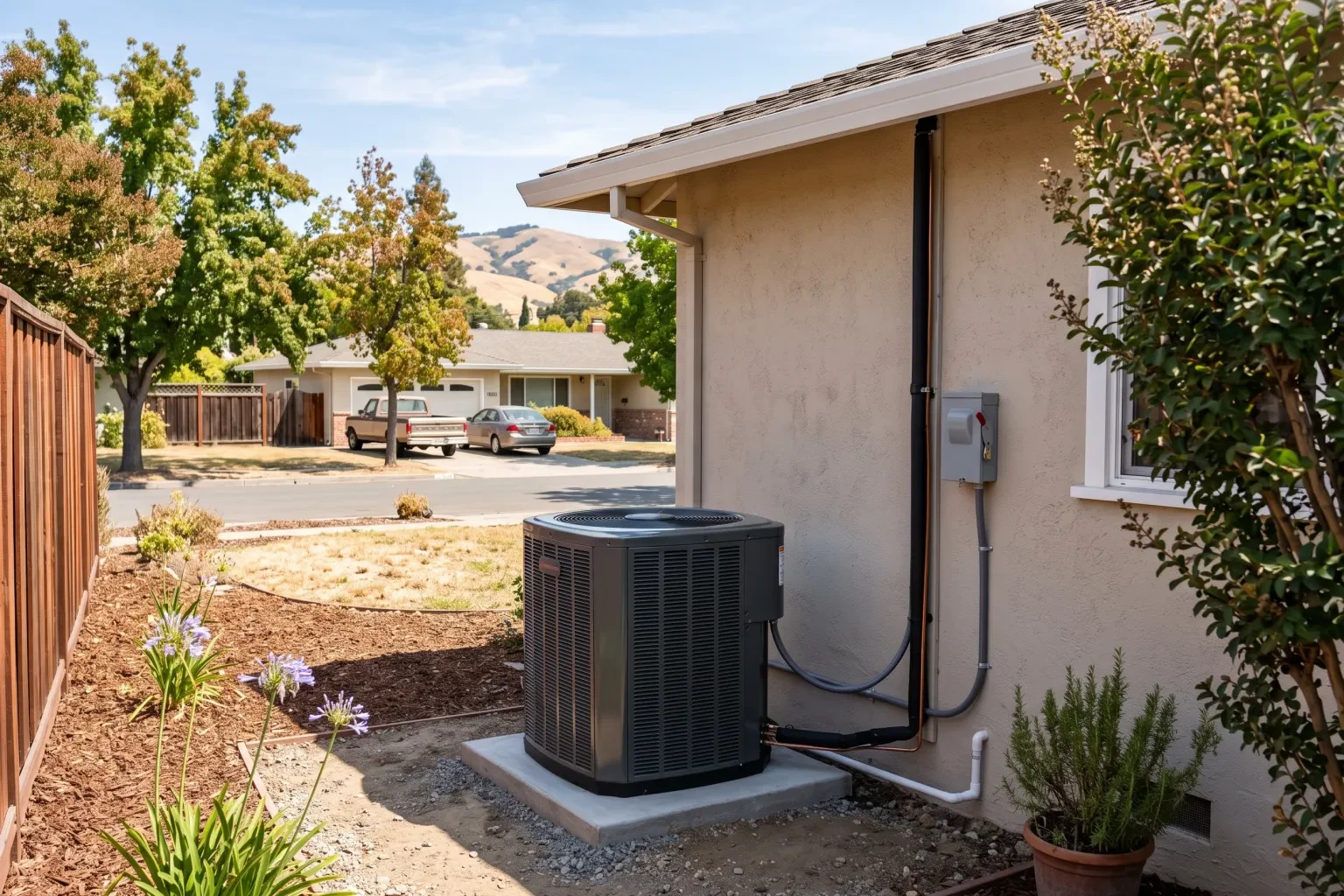
Summers in the Santa Clara Valley are dry, and inland and southern parts of the valley run noticeably hotter than neighborhoods near the Bay. If your air conditioner can't keep up anymore, or your home has never had central cooling, a new installation can make those long, hot stretches much more comfortable. CoolVantage HVAC Service installs central air conditioners, heat pumps, and ductless systems for homeowners in San Jose and nearby cities. This page explains how to tell when installation makes sense, what we look at before recommending equipment, how repair compares with replacement, what drives the cost, and what to expect from your visit.
Signs It's Time to Consider a New AC
Not every struggling air conditioner needs to be replaced. But certain patterns suggest it's worth discussing installation instead of scheduling another repair.
Age alone isn't a reason to replace a system that still runs well. We'd rather give you a straight read on your system's condition than recommend new equipment you don't need yet.
- Repairs are becoming frequent, or the same parts keep failing.
- Some rooms stay warm even when the system runs for long stretches.
- Your system uses an older refrigerant that is being phased out, which makes recharges harder to source.
- Summer energy bills keep climbing even though your habits haven't changed.
- The outdoor unit is unusually loud, rattles, or shuts off on its own during hot afternoons.
- Your home has no central cooling, and you rely on window units or fans.
- Your furnace is also aging, and you want to plan heating and cooling together.
What We Check Before Recommending a System
A good installation starts with understanding your house, not with a product catalog. Before we recommend any equipment, we look at the following:
An oversized system turns on and off too often, which wastes energy, wears parts faster, and leaves rooms feeling clammy. An undersized system runs nonstop on the hottest days and still falls behind. Getting the size and airflow right matters more than most brand choices.
- Cooling load: your home's size, insulation, windows, sun exposure, ceiling heights, and layout, so the system is sized to the house rather than guessed from square footage alone.
- Ductwork: leaks, crushed or disconnected runs, undersized returns, and duct insulation in the attic or crawlspace.
- Electrical: panel capacity, breaker size, the outdoor disconnect, and wiring to the condenser location.
- Indoor equipment: whether your furnace or air handler is compatible with a new outdoor unit, and the condition of the blower and coil.
- Outdoor placement: clearance around the unit, noise near bedrooms or neighbors, the pad, and drainage.
- Thermostat and controls: whether your current thermostat will work properly with the new system.
Repair vs. Replace: Your Options
When your current system still has useful life, a targeted repair is often the sensible choice. We'll explain what failed, what it takes to fix, and whether other components look close to failing, so you can decide with the full picture.
If replacement makes more sense, you typically have several paths:
Heat pumps deserve a serious look in the Bay Area. Under the Bay Area Air District's appliance rules, natural gas furnaces manufactured from 2029 must meet a zero-NOx emission standard, which in practice points homeowners toward heat pumps when a furnace is replaced after that date. These rules don't require you to replace working equipment. They apply only when an existing furnace fails or is replaced. Still, if your furnace is getting old, it can make sense to plan heating and cooling at the same time rather than replacing the AC now and the furnace a few years later.
- Replace the outdoor condenser and indoor coil as a matched set, keeping a furnace that's still in good shape.
- Install a heat pump, which cools in summer and heats in winter, either alongside your furnace or in place of it.
- Choose a ductless mini-split for homes without ducts, for additions, or for rooms the central system never cooled well.
- Replace the full system, including the furnace or air handler, with duct repairs or upgrades where needed.
What Affects the Cost of AC Installation
We don't quote installation prices without seeing the home, because the same equipment can involve very different work from one house to the next. These are the main factors:
On incentives: the federal Energy Efficient Home Improvement Credit (25C) covered qualifying heat pumps placed in service before December 31, 2025, and it isn't available for new installations after that date. Local programs may still help. Bay Area homeowners can check BayREN and their local clean energy provider for current heat pump and electrification incentives. Amounts and availability change by funding cycle, so we confirm the current offer before including it in your quote.
- System type: central AC, heat pump, or ductless mini-split.
- Capacity, based on your home's cooling load.
- Efficiency level and features such as variable-speed or two-stage operation.
- Ductwork condition, and whether ducts need sealing, repair, or replacement.
- Electrical work, such as a new circuit, a disconnect, or panel upgrades.
- Access: tight attics, crawlspaces, narrow side yards, or rooftop placement.
- Refrigerant line set replacement if the existing lines can't be reused.
- Permits and inspections where your city requires them.
- Add-ons such as a new thermostat or upgraded filtration.
How an Installation Visit Works
We keep the process simple and explain each step before we start it.
- Assessment: a technician visits your home, looks at your current system, ductwork, and electrical, and asks how the house feels in different rooms and seasons.
- Written options: you get a clear proposal that lays out the options, including repair when that's reasonable, along with what each one involves.
- Scheduling: we set an installation date and arrange any permits your city requires.
- Installation day: we protect floors and work areas, remove the old equipment, set the new indoor and outdoor components, connect refrigerant lines, pressure-test and evacuate the system, and complete the wiring.
- Testing: we check refrigerant charge, airflow, temperature difference across the coil, and thermostat operation before calling the job done.
- Walkthrough: we show you how to use the thermostat, where the filter is and how often to change it, and what basic upkeep keeps the system running well.
- Inspection: where a permit was pulled, we coordinate the final city inspection.
AC Installation by city
- AC Installation in Campbell
- AC Installation in Los Gatos
- AC Installation in Monte Sereno
- AC Installation in Santa Clara
- AC Installation in Saratoga
- AC Installation in Cupertino
- AC Installation in Milpitas
- AC Installation in Sunnyvale
- AC Installation in Los Altos
- AC Installation in Mountain View
- AC Installation in Morgan Hill
- AC Installation in Fremont