
The short answer
If your home feels dusty, stuffy, musty, or too dry, the cause is usually somewhere in your HVAC system: the filter, leaky ducts, a dirty coil, humidity, or ventilation. CoolVantage inspects the whole air path, explains what we find, and gives you a written estimate with repair, upgrade, or replacement options.
Indoor air quality mostly comes down to what your heating and cooling system does with the air it moves. Every time your furnace, heat pump, or air conditioner runs, it pulls air from your rooms, passes it through a filter and over a coil, and pushes it back out through your ducts. If any part of that path is dirty, leaking, or poorly matched to your home, you breathe the results. CoolVantage HVAC Service helps homeowners in San Jose and nearby cities find out what is actually going on with their indoor air. We then fix the parts of the system that affect it, from filters and ductwork to ventilation, humidity, and air cleaning equipment.
Signs Your Home Needs an Indoor Air Quality Check
Santa Clara Valley homes deal with two different seasons of air problems. Summers are dry and bring dust and pollen. Inland and southern parts of the valley run hot enough that air conditioners run for long stretches, circulating whatever is in the ducts. In the mild, damp winters, windows stay closed, and bathrooms, closets, and crawlspaces can start to feel musty. Either way, the signs usually show up gradually.
None of these signs points to a specific cause on its own. A dusty house might come from leaky return ducts in the attic, a filter that doesn't seal in its slot, or a filter that is the wrong type for your system. That is why we inspect and test before recommending anything.
- Dust settles on furniture within a day or two of cleaning
- Allergy or sinus symptoms that ease when you leave the house
- Musty, stale, or burning smells when the system turns on
- Dust or dark streaks around supply registers
- Rooms that feel stuffy even when the temperature is right
- Condensation on windows or a damp feel in winter
- Air that feels very dry, with static shocks or dry skin
- Filters that look clogged long before their replacement date
What We Check During an Indoor Air Quality Visit
An indoor air quality visit covers the whole air path, not just the filter. We focus on the parts of your system that most often cause problems in South Bay homes.
We explain what we find in plain terms and show you photos or readings when they help.
- Filter fit and type: whether the filter seals in its slot, and whether its rating suits your blower so it cleans the air without choking airflow
- Return and supply ducts: disconnected joints, crushed runs, and gaps that pull in attic or crawlspace dust
- Blower and evaporator coil: dirt buildup, biological growth, and the condition of the drain pan
- Condensate drain: clogs or standing water that can cause odors and moisture problems
- Airflow and static pressure: whether the system moves the amount of air it was designed to move
- Humidity: readings in several rooms to see if the house is too dry or too damp
- Ventilation: how fresh air gets in, and whether bathroom and kitchen exhaust fans work and vent outside
- Combustion safety on gas furnaces: flue and venting condition, because a cracked or blocked vent is a safety issue, not just an air quality one
Repair, Upgrade, or Replace: Your Options
Many air quality problems can be solved with repairs and adjustments. These include sealing leaky duct joints, replacing a crushed section of flex duct, cleaning a dirty coil and blower, clearing a condensate drain, or installing a filter cabinet that actually seals. Any of these can make a noticeable difference without new equipment.
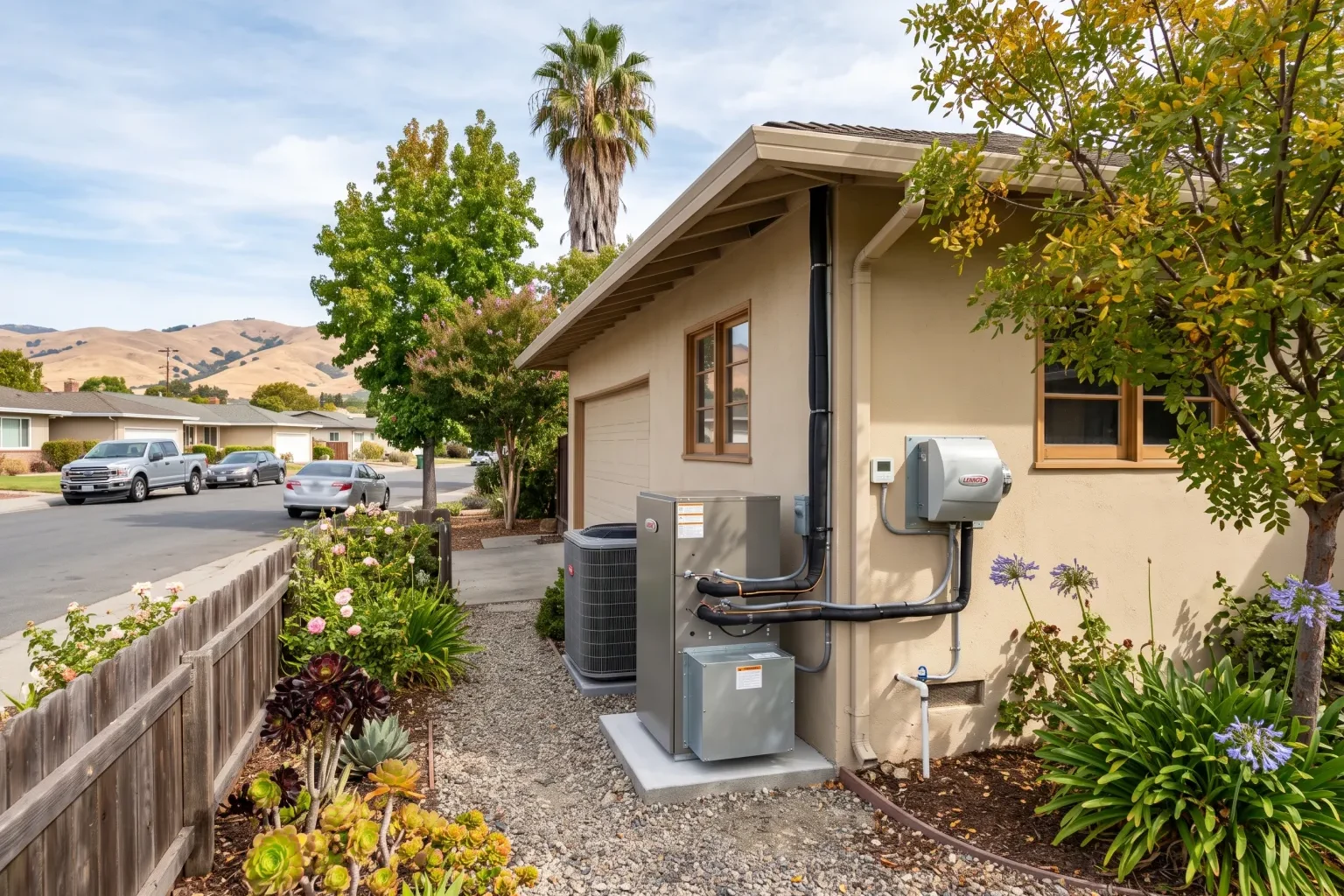
Some homes benefit from added equipment: - A media filter cabinet that holds a thicker, longer-lasting filter - A whole-home air cleaner - A whole-home humidifier for very dry winter air - Dehumidification for damp areas - A balanced ventilation system that brings in filtered outdoor air while exhausting stale air We recommend these only when testing shows they solve a real problem in your house.
Replacement makes sense when the air quality problem is tied to equipment near the end of its life. Examples include a badly corroded coil, a blower that can no longer move enough air, or ductwork that is falling apart throughout the attic.
If you are thinking about replacing a gas furnace, keep one rule in mind. Under Bay Area Air District Rule 9-4, gas furnaces manufactured from 2029 must meet a zero-NOx standard, which in practice points many homeowners toward heat pumps. The rule does not require you to replace working equipment. It applies only when a furnace fails or is replaced.
If a heat pump is an option, we can help you check BayREN and your local clean energy provider for current incentives. Amounts and availability change by funding cycle, so we confirm the current offer before including it in a quote. The federal 25C tax credit that covered qualifying heat pumps is no longer available for new installations.
What Affects the Cost of Indoor Air Quality Work
We don't quote indoor air quality work without seeing your system, because the cost depends on what we find. The main factors are listed below.
You get a written estimate before any work begins. When there is more than one reasonable way to solve the problem, the estimate lists each option.
- Whether the fix is a repair, a cleaning, or new equipment
- How easy it is to reach the ducts and air handler, such as in a tight attic or crawlspace
- How much duct sealing or duct replacement is needed
- The type of filtration, humidity control, or ventilation equipment you choose
- Whether added equipment needs electrical work or a new drain line
- The size and layout of your home and the number of systems
- Any permits your city requires for the work
How an Indoor Air Quality Visit Works
When you schedule, we ask what symptoms you are noticing, when they happen, and the age and type of your system. That helps the technician bring the right tools and parts.
You decide what to do. If the right answer is a filter change and a drain cleaning, we will tell you that.
- Walkthrough: we talk with you about problem rooms and look at registers, returns, and the thermostat
- Inspection and testing: we check the equipment, ducts, filter, drain, humidity, and airflow
- Findings: we explain what is causing the issue and what is not
- Options: you get a written estimate with repair, upgrade, or replacement choices where they apply
- Work: with your approval, we finish repairs on the same visit when parts and time allow, or schedule a return visit
- Follow-up: we show you how to change filters and maintain any new equipment