
The short answer
If your furnace is aging, needs frequent repairs, heats unevenly, or raises safety concerns, replacement may be worth considering, but a working furnace does not have to be replaced. We inspect your system, sizing, and ductwork, then lay out your repair, gas furnace, and heat pump options so you can choose what fits your home.
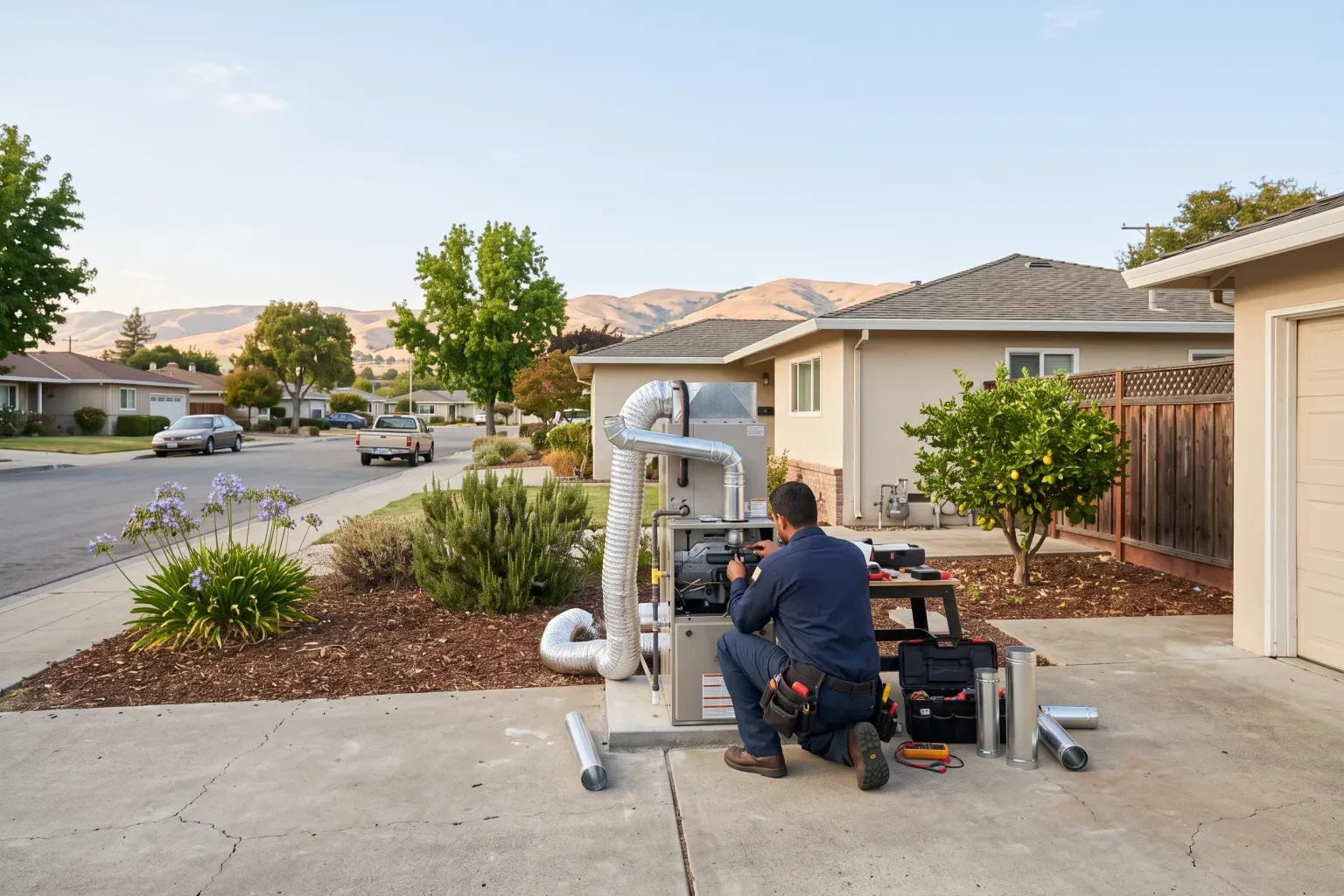
Most San Jose homes don't run the furnace hard, but when a cold, damp winter night arrives, you want heat that comes on reliably and runs safely. Installing a new furnace is a bigger decision than a repair, and the right answer depends on your home, your existing ductwork, and how long you plan to stay. CoolVantage HVAC Service installs and replaces furnaces for homeowners in San Jose and nearby cities across the Santa Clara Valley. This page explains when replacement makes sense, what we look at before recommending anything, how a gas furnace compares with a heat pump under current Bay Area rules, what drives the cost, and what to expect from our first visit to the first heating cycle.
Signs It May Be Time for a New Furnace
A furnace rarely fails without warning. In the Santa Clara Valley, winters are mild and damp rather than harsh, so a furnace can run for many seasons with light use. That also means problems can go unnoticed until the first cold snap. These are the signs that tell us a closer look is worthwhile:
- Repairs are becoming frequent, or one major part has failed on an older unit
- Some rooms stay cold while others overheat, even with vents open
- The furnace short-cycles, turning on and off more often than it should
- You hear banging, rumbling, squealing, or rattling during startup or operation
- Your gas or electric bills are rising without a change in how you use heat
- The burner flame looks yellow or flickering instead of steady blue
- You notice more dust, dry air, or soot around registers
- Your carbon monoxide alarm has gone off, or you smell gas (leave the home and call your gas utility first)
What We Check Before Recommending a Furnace
We don't recommend a replacement based on age alone. A new furnace should match your house, and a good recommendation starts with understanding what you have now and why it isn't working well.
During an assessment, we inspect the existing furnace's condition, including the heat exchanger, burners, ignition, blower, and controls. We look at venting and combustion air, because safe exhaust matters as much as the furnace itself. We check your ductwork for leaks, crushed runs, poor insulation, and undersized returns, since a new furnace connected to leaky ducts will still leave rooms uncomfortable.
We also look at sizing. A furnace that is too large cycles on and off and wears out sooner; one that is too small runs constantly on cold nights. Sizing depends on your home's square footage, insulation, windows, layout, and where it sits in the valley. Finally, we review your electrical panel and gas line, which affects whether a heat pump, a gas furnace, or a combination is practical.
Repair, Replace, or Switch to a Heat Pump
If your furnace can be repaired safely and the repair makes financial sense, we'll tell you. Many furnaces simply need a new igniter, flame sensor, blower motor, or control board. Under Bay Area Air District rules, you are not required to replace working equipment; the appliance rules apply only when an existing furnace fails or is replaced.
When replacement is the better choice, you generally have two directions. A new gas furnace keeps your current setup and is often the simplest swap, especially if you already have central air or don't plan to add cooling. A heat pump provides both heating and cooling from one system, which suits the Santa Clara Valley well, since inland and southern parts of the valley run noticeably hotter in summer than areas near the Bay.
Timing is worth considering too. Under Air District Rule 9-4, natural gas furnaces manufactured from 2029 must meet a zero-NOx emission standard, which in practice points homeowners toward heat pumps when a furnace is replaced after that date. If you're replacing a furnace now, we'll explain how that affects your long-term plans so there are no surprises later.
On incentives: the federal Energy Efficient Home Improvement Credit (25C) only covered qualifying heat pumps placed in service before December 31, 2025, so it isn't available for new installations. Bay Area homeowners can still check BayREN and their local clean energy provider for current heat pump and electrification incentives. Those amounts and availability change by funding cycle, so we confirm the current offer before including it in a quote.
What Affects the Cost of Furnace Installation
Every installation is quoted for the specific home, because the same furnace can involve very different amounts of work from one house to the next. These are the main factors that shape your quote:
- System type: gas furnace, heat pump, or a dual-fuel combination
- Equipment efficiency and features, such as variable-speed blowers or multi-stage heating
- Correct sizing for your home's layout and insulation
- Ductwork condition and whether ducts need sealing, repair, or replacement
- Venting changes, gas line work, or electrical panel upgrades
- Furnace location, such as an attic, crawlspace, garage, or closet, and how easy it is to access
- Permits and inspections required by your city
- Thermostat upgrades or zoning additions
- Any available incentives that apply at the time of installation
How a Furnace Installation Visit Works
It starts with an in-home assessment. A technician inspects your current system, ductwork, venting, and electrical and gas connections, and asks how your home feels in winter and summer. We'll talk about which rooms are uncomfortable, your budget, and whether cooling matters to you.
Next, you receive a written recommendation with clear options, such as repair, a comparable gas furnace, or a heat pump, along with what each includes. We explain the tradeoffs in plain terms and answer questions before you decide. There's no pressure to choose on the spot.
On installation day, we protect floors and work areas, disconnect and remove the old equipment, and install the new system along with any agreed duct, venting, or electrical work. We pull the required permits and coordinate inspections with your city.
Before we leave, we start the system, test airflow, check combustion and safety controls on gas equipment, set up your thermostat, and walk you through basic operation and filter changes. We also haul away the old furnace and clean up the work area.