
The short answer
A heat pump is worth considering when your furnace or air conditioner is failing, struggling, or due for replacement, since one system handles both heating and cooling in the South Bay's mild climate. We assess your home, ductwork, and electrical service first, then lay out repair and replacement options so you can choose with clear information.
A heat pump heats and cools your home with one system, moving heat instead of burning fuel. For many homes in San Jose, Santa Clara, Campbell, Milpitas, and Sunnyvale, that is a good match for the local climate: dry summers that can get hot, especially in inland and southern parts of the valley, and mild, damp winters that rarely push equipment to its limits. CoolVantage HVAC Service installs heat pumps and helps homeowners decide whether one makes sense for their house. This page covers the signs it may be time to switch, what we look at before recommending anything, your repair and replacement options, what drives the cost, and how a visit works.
Signs a Heat Pump May Be the Right Next Step
Nothing here means you must replace working equipment. Bay Area Air District appliance rules apply only when an existing furnace or water heater fails or is replaced. Still, certain situations make it a good time to look at a heat pump.
If your furnace is getting near the end of its life, keep the longer view in mind. Under the Air District's furnace rule, natural gas furnaces manufactured from 2029 must meet a zero-NOx standard, which in practice points homeowners toward heat pumps for replacements after that date. Planning ahead can help you avoid a rushed decision during a breakdown.
- Your air conditioner or furnace needs frequent repairs, or a major part has failed
- Some rooms stay too warm in summer or too cool on damp winter mornings
- You have no central cooling and want it, especially in hotter inland neighborhoods
- Your current system is noisy, short-cycles, or struggles to hold a set temperature
- You are remodeling, adding a room, or replacing ductwork anyway
- You want to move away from gas appliances over time
What We Check Before Recommending a System
A heat pump has to fit your house, not just a square-footage chart. We look closely at how your home holds heat and how air moves through it before suggesting equipment size or type.
This assessment also tells us whether a ducted system, a ductless mini-split, or a mix of both is the better fit. Older homes without ducts, converted garages, and additions often do well with ductless units.
- Heating and cooling load, based on insulation, windows, sun exposure, and layout
- Condition, sizing, and sealing of existing ductwork
- Electrical panel capacity and whether a dedicated circuit is available
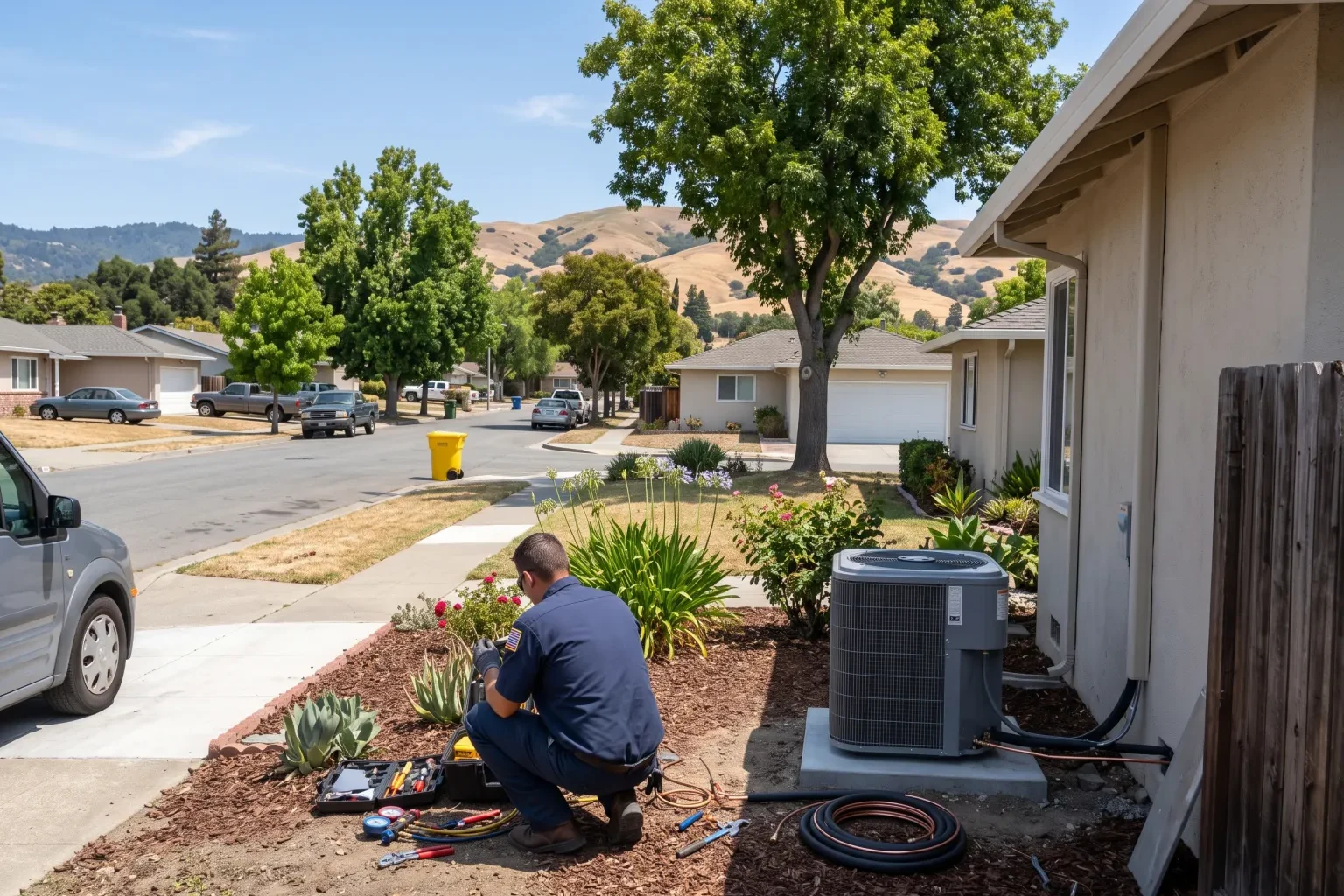
- Outdoor unit placement, including clearance, drainage, and noise near bedrooms or neighbors
- Thermostat compatibility and zoning needs
- Condition of your current furnace, air conditioner, or air handler
Repair vs. Replace: Your Options
If you already have a heat pump that is not working well, repair is often the first thing we look at. Problems like a failed capacitor, a refrigerant leak, a faulty reversing valve, or a dirty coil can usually be fixed without replacing the whole system. We explain what we found and whether the repair is reasonable given the age and condition of the equipment.
If you have a furnace and air conditioner, you have a few paths. You can repair what you have and plan for later. You can replace just the air conditioner with a heat pump and keep the furnace as backup heat, sometimes called a dual-fuel setup. Or you can switch fully to a heat pump for both heating and cooling. In the South Bay's mild winters, a properly sized heat pump typically handles heating on its own.
We walk through the tradeoffs of each option, including comfort, operating costs, and how each choice fits with future Air District rules, so you can decide what fits your budget and timeline.
What Affects the Cost of Heat Pump Installation
Every home is different, so we give a written estimate after seeing the house. These are the main factors that move the price up or down.
On incentives: the federal Energy Efficient Home Improvement Credit (25C) applied only to qualifying heat pumps placed in service before December 31, 2025, and is not available for new installations after that date. Bay Area homeowners can still check BayREN and their local clean energy provider for heat pump and electrification incentives. Amounts and availability change by funding cycle, so we confirm the current offer before including it in any quote.
- System type: ducted, ductless, or a combination
- Equipment size and efficiency level
- Whether ductwork needs repair, sealing, or replacement
- Electrical upgrades, such as a new circuit or panel work
- Number of zones or indoor units
- Removal of old equipment and site access, such as attics or tight side yards
- Local permit requirements
How a Visit Works
We keep the process straightforward so you know what is happening at each step.
First, we schedule a time that works for you and ask a few questions about your home and current system. During the visit, a technician inspects your equipment, ductwork, electrical service, and the spots where new units could go. We talk with you about comfort problems you have noticed and what you want from a new system.
Next, we give you a written estimate that explains the recommended equipment, any additional work, and the options we discussed. There is no pressure to decide on the spot.
If you move forward, we handle permits, schedule the installation, and set up and test the system when the work is done. Before we leave, we show you how to use the thermostat, change filters, and keep the outdoor unit clear.
Heat Pump Installation by city
- Heat Pump Installation in Campbell
- Heat Pump Installation in Los Gatos
- Heat Pump Installation in Monte Sereno
- Heat Pump Installation in Santa Clara
- Heat Pump Installation in Saratoga
- Heat Pump Installation in Cupertino
- Heat Pump Installation in Milpitas
- Heat Pump Installation in Sunnyvale
- Heat Pump Installation in Los Altos
- Heat Pump Installation in Mountain View
- Heat Pump Installation in Morgan Hill
- Heat Pump Installation in Fremont