
The short answer
Duct cleaning makes sense when there's a clear reason, such as dust blowing from registers, pest activity, mold, or debris from a recent remodel. We inspect first, then recommend cleaning, repair, or replacement based on what we find, with a written estimate before any work starts.
Your ducts carry all the heated and cooled air through your home. When they collect dust, debris, or pest droppings, or start leaking at the joints, you can end up with dusty rooms, odd smells, uneven temperatures, and a system that works harder than it should. CoolVantage HVAC Service cleans and inspects duct systems for homeowners in San Jose and nearby South Bay cities. We start by looking at what's actually inside your ducts and how they're holding up. Then we tell you plainly whether cleaning, repair, or replacement makes sense, or whether you don't need anything right now.
Signs Your Ducts Need Attention
Most homes don't need duct cleaning on a fixed schedule. It makes sense when there's a specific reason. In the Santa Clara Valley, dry summers bring plenty of fine dust. Inland and southern parts of the valley run noticeably hotter, so air conditioners often run hard for months and pull more air, along with whatever is in it, through the system. Mild, damp winters can also leave moisture in ducts that run through crawlspaces.
Watch for these signs:
- Dust puffs out of supply registers when the system starts, or settles again soon after you clean
- Visible lint, debris, or buildup on register grilles and inside the first few feet of duct
- Signs of rodents or insects, such as droppings, nesting material, or odors when the system runs
- Musty smells, or visible mold near registers, the air handler, or duct connections
- A recent remodel, drywall project, or floor sanding
- A home you recently moved into, with no record of when the ducts were last checked
- Some rooms getting much less airflow than others, which often points to damaged or disconnected ducts rather than dirty ones
What We Check During a Duct Inspection
A useful duct visit involves more than running a vacuum. We look at the whole air path so you know its real condition before you spend money on it.
When it helps, we take photos so you can see what we saw instead of taking our word for it.
- Supply and return registers and grilles, and the duct openings behind them
- Main trunk lines and branch runs we can reach in the attic, crawlspace, or garage
- Joints, seams, and connections, looking for gaps, separation, or failing tape and sealant
- Flexible duct, looking for kinks, crushed sections, sagging, or tears in the outer jacket and insulation
- The return side, including the filter slot and how well the filter fits, since a loose filter lets dust bypass it
- The blower and the area around the indoor coil, where buildup can restrict airflow
- Evidence of moisture, mold, or pest entry points
Clean, Repair, or Replace: Your Options
Not every duct problem calls for the same fix. Here's how we think about each option.
Some materials don't clean well. Flex duct with heavy mold growth and duct board with damaged lining are common examples. In those cases we'll tell you that cleaning isn't a good use of your money and explain what would work better.
- Cleaning: The right call when ducts are structurally sound but dusty, dirty, or contaminated after a remodel or pest problem.
- Repair: Disconnected runs, leaky joints, crushed sections, and small tears can usually be fixed by reconnecting, resealing, or replacing a short length of duct.
- Partial replacement: When one branch or one area of the system is badly damaged or heavily contaminated, replacing that section is often more sensible than cleaning it.
- Full replacement: Worth considering when much of the ductwork is aging, poorly insulated, wrongly sized, or damaged in many places, or when new equipment won't work well with the existing layout.
What Affects the Cost of Duct Work
We don't quote duct work without seeing it, because the job varies a lot from house to house. These are the main factors:
After the inspection, you get a written estimate that lists cleaning separately from any repair work. That way you can decide what to do now and what can wait.
- The size of the home and the number of supply and return registers
- How many HVAC systems you have and how the ducts are laid out
- Access, since tight attics, low crawlspaces, and ducts buried under insulation take more time
- Duct type, such as rigid metal, duct board, or flexible duct
- How much buildup or contamination there is, including pest debris or mold
- Whether sealing, repairs, or section replacement are needed in addition to cleaning
- Add-ons such as cleaning the blower and coil area or replacing worn registers
How a Duct Cleaning Visit Works
Most visits follow the same steps:
The system will be off while we work. We'll need clear access to the attic hatch, crawlspace entry, or garage, plus the registers in each room, so moving furniture or stored items away from those spots ahead of time helps the visit go faster.
- We ask what you've noticed, such as dust, smells, or rooms that don't keep up, and how old your system is.
- We inspect registers, accessible ductwork, and the air handler, and show you what we find.
- We explain your options and give you an estimate before starting any work.
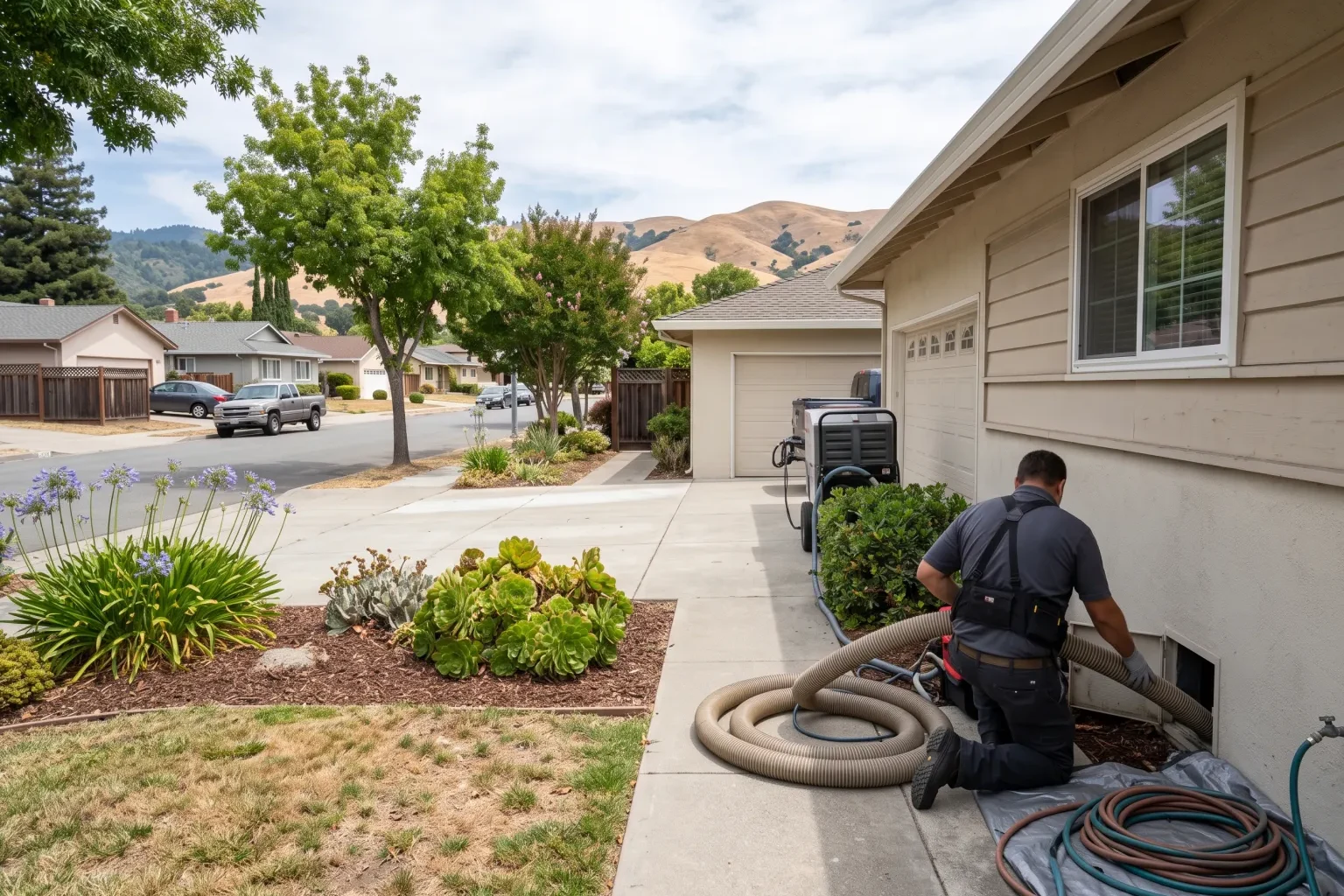
- For cleaning, we protect floors near work areas, seal off registers, and use negative-pressure vacuum equipment and agitation tools to loosen and remove debris.
- We clean the registers and grilles, check the filter, and recommend the right filter for your system.
- We walk you through what we did and point out anything worth keeping an eye on.
Your Ducts and Future Equipment Changes
If your furnace is getting older, it's worth knowing where your ducts stand. Under the Bay Area Air District's Rule 9-4, natural gas furnaces manufactured from 2029 must meet a zero-NOx emission standard, which in practice points homeowners toward heat pumps when a furnace is replaced after that date. The rule doesn't require you to replace working equipment. It applies only when an existing furnace fails or is replaced.
Heat pumps tend to perform best with well-sealed ducts sized for the airflow they need, so an inspection now can help you plan ahead. If you're considering electrification, check BayREN and your local clean energy provider for current incentives. Amounts and availability change by funding cycle, so we confirm the current offer before quoting it. Note that the federal 25C tax credit covered only heat pumps placed in service before December 31, 2025, so it isn't available for new installations.